Read the article here
Diego Sayanes, co-founder and CEO of Rua Asistencia, explains that his company builds “provider networks.” The company is growing with spin-offs and expanding into new markets. Its goal is to be present in 11 countries within three to five years.
Rua Asistencia is a service company that operates behind the scenes for major insurance companies, financial institutions, cooperatives, credit card companies, and security providers. It’s not an insurance company, as many people might think, but rather a white-label service provider that steps in when, for example, insurance companies need to respond to their clients’ needs. Its founder, Diego Sayanes (40 years old, married, two children), is the entrepreneur who shaped the business, expanded it with several spin-offs, and is now driving its internationalization. Currently, the group operates in England, Paraguay, and Argentina and is accelerating its expansion to reach 10 markets within three to five years, a goal it aims to achieve with the help of its current clients.
Lately, your company has been featured in the media quite often. Can you tell us how it started and evolved into what it is today?
Yes, it’s not a coincidence that we’re appearing in the media. It’s part of our communication strategy to showcase the company and what we do, which is not always well-known. Rua was founded in 2011 when I started my entrepreneurial journey. At that time, I was working at Mapfre as the operations manager for Uruguay and Paraguay. I spent seven years there, and suddenly, there was a corporate restructuring, which led me to leave the company. I didn’t expect to be without a job for long, but I spent seven months searching. In the seventh month, the idea of starting a business came to me, and I met with Oscar Churi, who is now my partner. He had a roadside assistance company in Ciudad de la Costa. I proposed creating an assistance company to compete internationally. At that time, the idea seemed crazy, but it turned out to be very successful. Today, we provide over 100,000 services per year in Uruguay. We cover 600,000 people on a corporate level and 150,000 people directly in the country.
Why was it considered a crazy idea back then?
Because we didn’t have the financial resources or infrastructure to do something like this. There’s a saying that goes, “The bumblebee is not designed to fly because of its shape, but luckily, the bumblebee doesn’t know that, so it flies.” Something similar happened with us.
Did you start with corporate clients only and then expand?
Yes, we started with corporate clients, and in 2014, we developed more partnerships and created a sales call center for products and services. We ventured into that model. Afterward, we diversified our portfolio further. We also expanded to England, Paraguay, and Argentina. Rua, in the countries where it operates, creates job opportunities. In Uruguay alone, we have more than 2,000 providers, and for many of them, Rua represents their primary source of income. Most of the services we offer are provided by external service providers. We build networks of providers from various industries, with contracts, service conditions, and rates, and then they provide services through Rua.
We expanded to England, then to Paraguay, and recently to Argentina. »
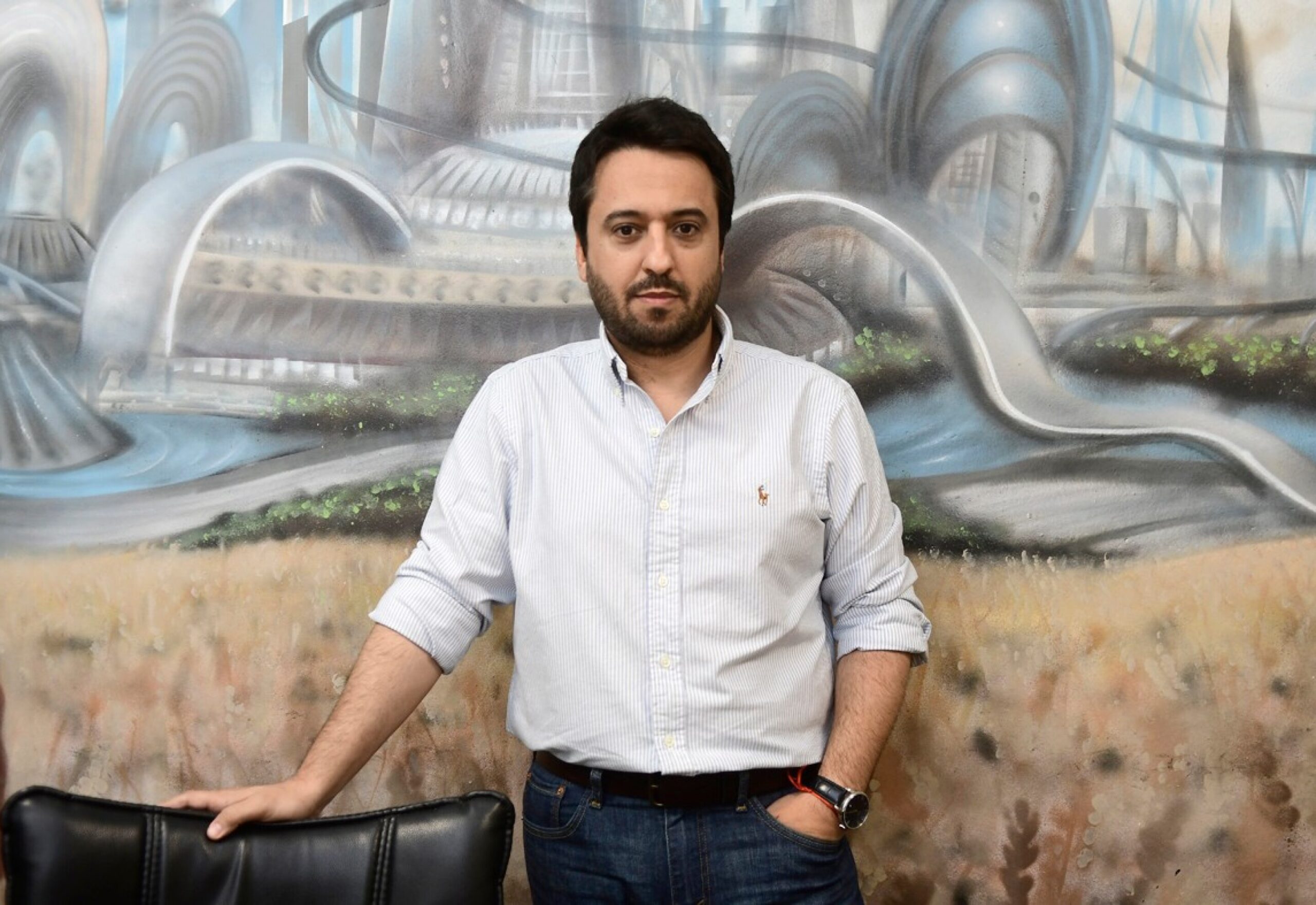
Diego Sayanes, co-founder and CEO of Rua Asistencia. (Photo: Marcelo Bonjour) Diego Sayanes Co-founder and CEO of Rua Asistencia
Some people think that you are an insurance company, but you are not. Could you explain this?
That’s correct; we are not an insurance company. We do work with insurance companies. We are a white-label service provider, and we have already provided over a million services. People may not be familiar with Rua because when they have an issue, such as at their home, they use their insurance policy from the insurance company. However, it’s Rua that is actually providing the service. Rua’s goal is to allow people who cannot access quality services to do so through us.
How many people work at Rua Asistencia?
Around 200; 50% work in the call center, and the rest are involved in development, infrastructure, administration, finance, and the commercial department.
Which services are the most requested?
The company has ten business verticals, with vehicle assistance as the flagship product. We also offer truck roadside assistance, home assistance, contingency products, medical assistance, travel assistance, special risk coverage, home security, special coverage for children, pet services, and funeral services. These are the products that are in high demand.
Did you notice any changes in demand during the pandemic?
Demand for mechanical assistance decreased when people stopped driving, but demand shifted to home-related coverage and medical services. There was a trend towards improving home facilities, repairs, renovations, or remodeling during the pandemic. We also expanded to Paraguay during the pandemic.
How risky was that decision in the midst of the pandemic?
We were unsure whether to move forward or not. Fortunately, we decided to be present there, and today, a year and a bit later, the company has established a presence in Asunción, with around 50 employees, seven clients, and our call center.
How many clients do you have in Uruguay?
Close to 50. In Uruguay, some of our clients include Surco Seguros, Cash, Fucerep, Copac, Coopace, Midinero, Ecocredit, Passcard, Fastcred, Crami, and Nuevo Siglo. Among international clients, we work with companies such as San Cristóbal Seguros, Zurich Santander, Wenance, Italmundo, Berkley, Securitas, MetLife, and Edenred. All of these clients generate business opportunities that we eventually share with peer companies or spin-offs.
For example?
In 2017, we started My Global Assist, which provides international travel assistance. In 2018, we launched the ServiciosYa! app, offering home, vehicle, and pet services. Mashkady is an online shopping platform that emerged in 2019, providing discounts in various sectors like gastronomy, clothing, technology, and more. In 2020, we established the Coopera innovation hub, connecting startups with corporations and investment funds. And this year, we created Onírica, a digital marketing agency.
How is Galgo progressing?
Galgo is a delivery startup that provides services to Rua, but it hasn’t grown much yet. We are still exploring its business model.
When you moved to your current headquarters, was it due to the group’s growth?
Yes, it’s located on Avenida Uruguay and Florida, half a block from the Central Bank. It’s a four-story building that we own, where all these companies operate.
How much has the company grown recently?
The growth has been steady. This year, we project growth of over 30% in Uruguay. From 2019 to 2020, it was slightly over 10%. That year had the lowest growth rate in the company’s history due to the market contractions caused by the pandemic. However, this year, the market has moved away from its conservative approach due to the improved situation.
The company’s internationalization began in England. Why did you choose that country?
I attended a technology fair in London, and the British Embassy in Uruguay invited me to a series of meetings with the Department for International Trade. They were looking for investors and had the Global Entrepreneur program, which helps companies establish themselves in the UK and expand to other countries. I applied for that program and was selected. We started in London in 2019 with ServiciosYa!, which is known as ServiCity there. This year, we also introduced Rua Assistant in England, with a team of six people, and we are about to close our first deals.
Why did you decide to expand to Paraguay and Argentina?
Paraguay was the result of our Latin American internationalization plan, and Argentina was included, where we started two months ago with a local country manager and a team conducting the initial commercial efforts. Despite the challenges it may pose, Argentina is an interesting market due to its size and opportunities for developing a business model like Rua’s. I grew up in Buenos Aires, so it has a personal connection for me. The strategy is to follow the presence of our clients in other countries, leverage that synergy, and proceed hand in hand with clients who pave the way for us.
What is the next step in your expansion?
Peru, Spain, Mexico, Brazil, the Dominican Republic, Chile, and Colombia. The plan is to be present in 11 countries within three to five years. I’m focused on an ambitious plan to globalize the company. In recent days, when we first spoke, I was in San Francisco, USA, working with an American accelerator to learn how to streamline companies’ internationalization processes. My role now is to globalize the company and accelerate processes. The question is whether we can open one market per year or try to be present in more than 10 markets within three to five years. We have set our sights on the latter option.
You are also planning to establish a foundation.
Yes, we are planning to create a foundation called “Un futuro mejor” (A Better Future) in 2022. I consider myself fortunate, and I believe in giving back to society. Successful entrepreneurs have an ethical commitment to their environment. We will collaborate on various social, environmental, and inclusive innovation activities.
What would you highlight about the Coopera innovation hub?
Through Coopera, we help startups develop, incubate their projects, and provide them with connections to secure clients for validation and growth. Within Coopera, there are programs such as Open Insurtech that we organized this year. It involved a call for startups to innovate within the insurance industry. We incubate them in Coopera with a group of mentors who help them improve their business models and products, so they can later offer their services to insurance companies. In November, we will launch Open Goodtech, aimed at identifying companies with proposals for social and environmental impact, such as addressing poverty, education, social equity, gender equality, and renewable energy. Coopera operates in Uruguay, but companies from other countries can participate in their calls. In Open Insurtech, about 100 companies applied, and more than half were from abroad, including Argentina, Mexico, Brazil, and Chile.